In pneumonia’s tug-of-war, lung microbiome could tip the balance

Northwestern University scientists have potentially uncovered a previously unknown, hidden player in pneumonia.

In a new study, scientists found the lungs’ own microbial community, or microbiome, appears to influence how the illness evolves, who responds well to treatment and whether a patient will recover successfully or continue to deteriorate.

Using lung samples from pneumonia patients, the team tracked how microbial ecosystems and immune responses evolved over time. Among their findings, they discovered patients most likely to recover shared two characteristics: Their lung microbiomes resembled oral microbiomes, and their microbial communities were dynamic rather than stable.

The findings eventually could help physicians predict patient outcomes, tailor personalized antibiotic treatment plans and develop therapies that nurture beneficial microbes in the lungs. It also could improve understanding of the elusive disease, which claims tens of thousands of lives annually in the United States, according to the U.S. Centers for Disease Control and Prevention (CDC).

The study was published in the journal Cell Host & Microbe.

“Most people are familiar with the gut microbiome or skin microbiome but are surprised to learn the respiratory tract also has a microbiome,” said Northwestern’s Erica Hartmann, who led the study. “For a long time, people actually thought the lungs were sterile and microbes were present only during an infection. It turns out that’s not the case. We wondered if the microbiome might help explain why some pneumonia patients respond to treatment and others do not. Ultimately, we hope this leads to better diagnostics and improved patient outcomes.”

An expert in microbiomes, Hartmann is an associate professor of civil and environmental engineering at Northwestern’s McCormick School of Engineering. The study was conducted in collaboration with Northwestern’s Successful Clinical Response in Pneumonia Therapy (SCRIPT) project. Study coauthor Dr. Richard Wunderink is a professor of medicine at Northwestern University Feinberg School of Medicine and principal investigator of the SCRIPT project.

Pneumonia’s innate unpredictability

Each year, pneumonia sends roughly 1.2 million people to emergency departments in the U.S., according to the CDC. Despite its prevalence, pneumonia remains surprisingly difficult to predict and treat. Even if two patients have the same diagnosis and receive the same antibiotic, they can have vastly different outcomes.

“Pneumonia is defined by its symptoms, not by its cause,” Hartmann said. “There is a huge proportion of pneumonia patients for which doctors can’t tell if it’s bacterial, viral or fungal. Hospital-acquired pneumonia and community-acquired pneumonia also are quite different. Depending on the type of bacterial infection the patient has, the antibiotics may or may not be effective.”

“This unpredictability has significantly hampered research efforts to understand pneumonia pathogenesis,” Wunderink said. “For way too long, we have used the 19th-century tool of bacterial cultures to study an important 21st-century problem. Sequencing data like this will allow greater understanding of how patients get pneumonia, what microbes are actually causing pneumonia, and ultimately, what pathogen is causing the pneumonia in the patient I am caring for right now.”

Identifying four distinct ‘pneumotypes’

To better understand the illness, Hartmann and her collaborators aimed to identify the microbes present in pneumonia patients. Working with Wunderink at Northwestern Medicine, the scientists collected multiple lung samples from more than 200 critically ill pneumonia patients in hospitals’ intensive care units. Then, they identified the microbes within the samples and measured how many bacteria were present.

After tracking the microbiomes over time, the team identified four distinct microbial patterns, or “pneumotypes,” associated with different types of pneumonia, including community-acquired, hospital-acquired and ventilator-acquired. Patients’ lungs were either dominated by microbes typically found in the mouth, on the skin or a mix of both. The fourth pneumotype was dominated by common pathogen Staphylococcus aureus.

Hartmann and her team discovered that the lung microbiomes and host’s immune response were intertwined and changed together. They also found that patients with oral-like pneumotypes were more likely to recover successfully. Skin-like and mixed pneumotypes were not clearly associated with recovery but also not clearly associated with decline. And the patients with Staphylococcus-dominated pneumotypes tended to have the worst outcomes.

“We’re still trying to understand what this means,” Hartmann said. “One speculative hypothesis is that the lungs already have constant exposure to oral-like microbes. The upper respiratory tract includes the mouth and throat, so saliva is constantly moving down and getting coughed back up. The immune system might already be adapted to those oral-like microbes, so it knows how to respond when it encounters them.”

Shifts linked to success

The scientists also found that the worst outcomes were associated with the most stable lung microbiomes.

“Lungs are like any other ecosystem,” Hartmann said. “When an ecosystem is perturbed, it shifts. Those shifts might give it the potential to kick out a pathogen. But if the community is too stable, then it might not be flexible enough to defend itself. Again, though, we don’t really know, so this is all highly speculative.”

To help confirm these speculations, Hartmann and her collaborators plan to conduct experiments in cellular cultures. The team could only obtain lung samples through bronchoscopy, which requires patients to already use ventilators. Although the experiments included ventilated patients without pneumonia as controls, it could not include healthy controls.

“Going forward, we want to culture these organisms and put them in a flask together to see how they interact,” Hartmann said. “But it does seem that the microbial communities and different pneumotypes do matter. And whether or not that pneumotype remains stable also matters. And that’s fascinating.”

The study was supported by the National Institutes of Health and the National Science Foundation.

This story originally appeared on Northwestern Now.

Airplane and hospital air is cleaner than you might think

When it comes to the air in public places, germophobes can breathe a bit easier. According to a new Northwestern University study, the ambient air on airplanes and in hospitals mostly contains harmless microbes typically associated with human skin.

In the first study of its kind, scientists used an unexpected sampling tool — used face masks and an aircraft air filter — to uncover the invisible world of microbes floating in our shared air. Their results revealed that the same types of harmless, human-associated bacteria dominate both airplane and hospital air.

Across all samples, the team detected 407 distinct microbial species, including common skin bacteria and environmental microbes. While a few potentially pathogenic microbes did appear, they were in extremely low abundance and without signs of active infection.

Not only does the study help illuminate what microbes exist in shared air, but it also demonstrates that face masks and air filters can be repurposed as non-invasive, cost-effective tools to monitor confined, high-traffic environments.

“We realized that we could use face masks as a cheap, easy air-sampling device for personal exposures and general exposures,” said Northwestern’s Erica M. Hartmann, who led the study. “We extracted DNA from those masks and examined the types of bacteria found there. Somewhat unsurprisingly, the bacteria were the types that we would typically associate with indoor air. Indoor air looks like indoor air, which also looks like human skin.”

An expert on indoor microbiomes, Hartmann is an associate professor of civil and environmental engineering at Northwestern’s McCormick School of Engineering.

A second life for used face masks

Hartmann and her team conceived the project in January 2022, amid the COVID-19 pandemic. At the time, travelers became increasingly concerned with how well airplane cabins filtered and circulated air. Hartmann received a grant from the Walder Foundation to collect airplanes’ cabin filters to look for evidence of pathogens.

Although Hartmann did procure an aircraft’s high-efficiency particulate air (HEPA) filter, which had been used for more than 8,000 flight hours, she quickly realized the project might be impractical.

“At the time, there was a serious concern about Covid transmission on planes,” Hartmann said. “HEPA filters on planes filter the air with incredibly high efficiency, so we thought it would be a great way to capture everything in the air. But these filters are not like the filters in our cars or homes. They cost thousands of dollars and, in order to remove them, workers have to pull the airplane out of service for maintenance. This obviously costs an incredible amount of money, and that was eye opening.”

Searching for another method that passively traps microbes, Hartmann and her team pivoted to a much cheaper and much less disruptive tool: face masks. For the study, volunteers wore face masks on both domestic and international flights. After landing, they put the masks into sterile bags and sent them to Hartmann’s lab. For comparison, Hartmann also collected face masks that volunteers took on flights but never wore.

To understand how indoor environments differ, Hartmann and her team wanted to examine another high-traffic, enclosed environment with heavily filtered air. The team selected hospitals as the second testbed. After wearing a face mask during a shift, hospital workers submitted their masks to Hartmann’s lab.

“As a comparison group, we thought about another population of people who were likely wearing masks anyway,” Hartmann said. “We landed on health care providers.”

The sky is clear

After receiving masks from travelers and health care workers, Hartmann’s team collected DNA from the outsides of masks. They found the air in hospitals and on airplanes contains a diverse but mostly harmless mix of microbes, with only minimal traces of potentially pathogenic species.

In both environments, common human-associated bacteria — especially those found on skin and in indoor air — dominated the samples. Although the abundance of each microbe present was slightly different, the microbial communities from hospitals and airplanes were highly similar. The overlap suggests that people themselves — rather than the specific environment — are the main source of airborne microbes in both settings. And those microbes floating around indoor air come from people’s skin, not from illness.

Hartmann’s team also identified a handful of antibiotic resistance genes, linked to major classes of antibiotics. While these genes do not indicate the presence of dangerous microbes in the air, they highlight how widespread antibiotic resistance has become.

Although indoor air might not be as harmful as some people may have feared, Hartmann emphasizes that airborne spread is just one way infections can travel. For many common illnesses, other routes — such as direct contact with an infected individual or interacting with high-touch surfaces — are far more important.

“For this study, we solely looked at what’s in the air,” Hartmann said. “Hand hygiene remains an effective way to prevent diseases transmission from surfaces. We were interested in what people are exposed to via air, even if they are washing their hands.”

The study, published in the journal Microbiome, was supported by the Walder Foundation.

This story originally appeared on Northwestern Now.
Seeking a postdoc to work at the interface of microbiology and conservation protecting corals

A healthy Floridian staghorn coral

Photo credit: Shayle Matsuda.

Do you like microbes and corals? Want to expand understanding of symbiosis while simultaneously developing new biotech? We are seeking a postdoctoral researcher to join us in applying for a Walder Foundation Biota Award to support an exciting collaboration between Northwestern University (Dr. Erica Hartmann, environmental microbiology) and Shedd Aquarium (Dr. Shayle Matsuda, coral biology and conservation). This co-mentored project can include identification and culture of beneficial bacteria from heat-tolerant corals to develop a probiotic that can be delivered to coral larvae and juveniles, testing whether microbiome interventions can enhance coral thermal tolerance, or other related topics.

By combining Dr. Hartmann’s expertise in microbiome science with Dr. Matsuda’s expertise in coral biology and restoration, this project offers a unique opportunity to bridge fundamental microbial ecology with applied conservation strategies for reef resilience.

We are looking for a candidate with strong experience in microbiome research (e.g., microbial isolation, cultivation, sequencing, and analysis) and an interest in conservation interventions. Experience working with corals is a plus but not required.

The position is contingent on securing external fellowship funding, and we are eager to support an outstanding candidate in developing a competitive Walder Biota Award application.

If you are passionate about microbial ecology, coral conservation, and translational approaches to climate resilience, we encourage you to reach out to learn more. Contact us via email with “coral microbes” in the subject line by September 21.

Viruses are teeming on your toothbrush, showerhead

Step aside, tropical rainforests and coral reefs, the latest hotspot to offer awe-inspiring biodiversity is in your bathroom.

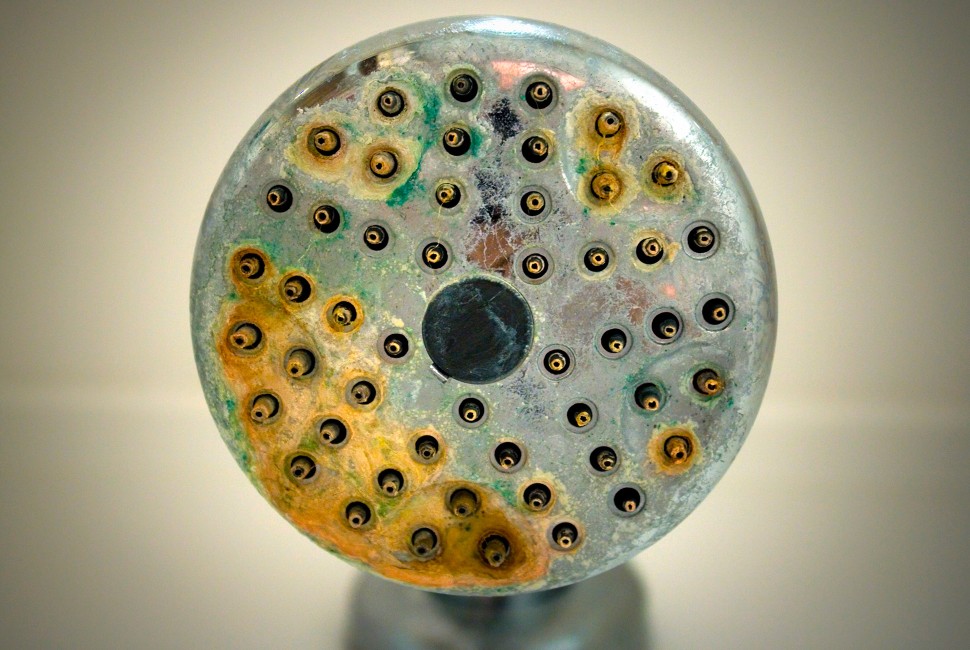
Northwestern microbiologists found more than 600 viruses on samples collected from used toothbrushes and shower heads.

In a new Northwestern-led study, microbiologists found that showerheads and toothbrushes are teeming with an extremely diverse collection of viruses — most of which have never been seen before.

Although this might sound ominous, the good news is these viruses don’t target people. They target bacteria.

The microorganisms collected in the study are bacteriophage, or “phage,” a type of virus that infects and replicates inside of bacteria. Although researchers know little about them, phage recently have garnered attention for their potential use in treating antibiotic-resistant bacterial infections. And the previously unknown viruses lurking in our bathrooms could become a treasure trove of materials for exploring those applications.

“The number of viruses that we found is absolutely wild,” said Northwestern’s Erica M. Hartmann, who led the study, which was published in the journal Frontiers in Microbiomes. “We found many viruses that we know very little about and many others that we have never seen before. It’s amazing how much untapped biodiversity is all around us. And you don’t even have to go far to find it; it’s right under our noses.”

An indoor microbiologist, Hartmann is an associate professor of civil and environmental engineering at Northwestern’s McCormick School of Engineering and a member of the Center for Synthetic Biology.

The return of ‘Operation Pottymouth’

The new study is an offshoot of previous research, in which Hartmann and her colleagues at University of Colorado at Boulder characterized bacteria living on toothbrushes and showerheads. For the previous studies, the researchers asked people to submit used toothbrushes and swabs with samples collected from their showerheads.

Inspired by concerns that a flushing toilet might generate a cloud of aerosol particles, Hartmann affectionately called the toothbrush study, “Operation Pottymouth.”

“This project started as a curiosity,” Hartmann said. “We wanted to know what microbes are living in our homes. If you think about indoor environments, surfaces like tables and walls are really difficult for microbes to live on. Microbes prefer environments with water. And where is there water? Inside our showerheads and on our toothbrushes.”

What they found: An ‘incredible diversity of viruses’

After characterizing bacteria, Hartmann then used DNA sequencing to examine the viruses living on those same samples. She was immediately blown away. Altogether, the samples comprised more than 600 different viruses — and no two samples were alike.

“We saw basically no overlap in virus types between showerheads and toothbrushes,” Hartmann said. “We also saw very little overlap between any two samples at all. Each showerhead and each toothbrush is like its own little island. It just underscores the incredible diversity of viruses out there.”

A potential pathogen fighter

While they found few patterns among all the samples, Hartmann and her team did notice more mycobacteriophage than other types of phage. Mycobacteriophage infect mycobacteria, a pathogenic species that causes diseases like leprosy, tuberculosis and chronic lung infections. Hartmann imagines that, someday, researchers could harness mycobacteriophage to treat these infections and others.

“We could envision taking these mycobacteriophage and using them as a way to clean pathogens out of your plumbing system,” she said. “We want to look at all the functions these viruses might have and figure out how we can use them.”

Avoid overreacting: Most microbes ‘will not make us sick’

But, in the meantime, Hartmann cautions people not to fret about the invisible wildlife living within our bathrooms. Instead of grabbing for bleach, people can soak their showerheads in vinegar to remove calcium buildup or simply wash them with plain soap and water. And people should regularly replace toothbrush heads, Hartmann says. Hartmann also is not a fan of antimicrobial toothbrushes, which she said can lead to antibiotic-resistant bugs.

“Microbes are everywhere, and the vast majority of them will not make us sick,” she said. “The more you attack them with disinfectants, the more they are likely to develop resistance or become more difficult to treat. We should all just embrace them.”

This story originally appeared on Northwestern Now.

Check us out at ASM Microbe 2024!

Hartmann lab members are taking ASM Microbe 2024 by storm. Come see our posters listed below and find out about the awesome research we’ve been doing. See you in Atlanta!

The Hartmann lab at a previous ASM Microbe

The Hartmann lab at a previous ASM Microbe. Left to right: Weitao Shuai, Jiaxian Shen, Stefanie Huttelmaier, Erica Hartmann, Olivia Barber, Jack Sumner.

Weitao Shuai
Identifying Antimicrobial Resistance Genes from Environmental Microbiomes with Multiplexed Functional Metagenomics
AES-FRIDAY-794

Anna Amani Moghadam
Metagenomic Analysis Shows Culture-Positive Bacterial Pathogens are Present at Low Abundance in Human Lung Microbiome in Clinically Ill Patients and Murine Model of Gastrointestinal Colonization
HMB-SATURDAY-935

Jack Sumner
Transitions in Lung Microbiota Landscape Associate with Distinct Patterns of Pneumonia Progression
HMB-SATURDAY-958

Cole Wilson
Efficacy of CRISPRi and CRISPR Cytosine Base Editor for Reducing Biofilm Formation in Pseudomonas aeruginosa PA14
AAR-SUNDAY-473

Olivia Barber
Staphylococcus spp. from the International Space Station Contain Quaternary Ammonium Compound Resistance Genes
AES-SUNDAY-733

Weitao Shuai
Indoor Microorganisms Present Different Responses to Metal-Amended Antimicrobial Textiles
AES-SUNDAY-739

Engineering viruses to kill deadly pathogens

Northwestern University researchers have successfully coaxed a deadly pathogen to destroy itself from the inside out.

Petri dishes with bacterial lawns, phage plaques.

The dark spots in the dishes mark areas where phage burst out of the bacteria, killing them. Photo credit: Cole Wilson

In the new study, researchers modified DNA from a bacteriophage or “phage,” a type of virus that infects and replicates inside of bacteria. Then, the research team put the DNA inside Pseudomonas aeruginosa (P. aeruginosa), a deadly bacterium that is also highly resistant to antibiotics. Once inside the bacterium, the DNA bypassed the pathogen’s defense mechanisms to assemble into virions, which sliced through the bacterium’s cell to kill it.

Building on a growing interest in “phage therapies,” the experimental work represents a critical step toward engineering designer viruses as new therapeutics to kill antibiotic-resistant bacteria. It also reveals vital information about the innerworkings of phages, a little-studied area of biology.

The study was published Jan. 31 in the journal Microbiology Spectrum.

“Antimicrobial resistance is sometimes referred to as the ‘silent pandemic,’” said Northwestern’s Erica Hartmann, who led the work. “The numbers of infections and deaths from infections are increasing worldwide. It’s a massive problem. Phage therapy has emerged as an untapped alternative to our reliance on using antimicrobials. But, in many ways, phages are microbiology’s ‘final frontier.’ We don’t know much about them. The more we can learn about how phage work, the more likely we can engineer more effective therapeutics. Our project is cutting-edge in that we are learning about phage biology in real time as we engineer them.”

An indoor microbiologist, Hartmann is an associate professor of civil and environmental engineering at Northwestern’s McCormick School of Engineering and a member of the Center for Synthetic Biology.

Desperate need for antibiotic alternatives

Associated with an increase in antimicrobial use, the rise of antibacterial resistance is an urgent and growing threat to the global population. According to the Centers for Disease Control and Prevention (CDC), nearly 3 million antimicrobial-resistant infections occur each year in the United States alone, with more than 35,000 people dying as a result.

The growing crisis has motivated researchers to look for alternatives to antibiotics, which are continually losing effectiveness. In recent years, researchers have started to explore phage therapies. But even though billions of phages exist, scientists know very little about them.

“For every bacterium that exists, there are dozens of phages,” Hartmann said. “So, there is an astronomically large number of phages on Earth, but we only understand a handful of them. We haven’t necessarily had the motivation to really study them. Now, the motivation is there, and we are increasing the number of tools we have to dedicate to their study.”

Treatment without side effects

To explore potential phage therapies, researchers either pinpoint or modify an existing virus to selectively target a bacterial infection without disrupting the rest of the body. Ideally, scientists one day could tailor a phage therapeutic to infect a specific bacterium and design “a la carte” therapeutics with precise traits and characteristics to treat individual infections.

“What’s powerful about phage is it can be very specific in the way that antibiotics are not,” Hartmann said. “If you take an antibiotic for a sinus infection, for example, it disrupts your entire gastrointestinal tract. A phage therapy can be designed to affect only the infection.”

While other researchers have investigated phages therapies, almost all of those studied have focused on using phages to infect Escherichia coli. Hartmann, however, decided to focus on P. aeruginosa, one of the five most deadly human pathogens. Particularly dangerous for people with compromised immune systems, P. aeruginosa is a leading cause of hospital infections, often infecting patients with burn or surgery wounds as well as lungs in people with cystic fibrosis.

“It is one of the highest priority, multi-drug resistant pathogens that many people are really concerned about,” Hartmann said. “It is extremely drug resistant, so there is an urgent need to develop alternative therapeutics for it.”

Mimicking infection, bypassing defenses

In the study, Hartmann and her team started with P. aeruginosa bacteria and purified DNA from several phages. Then, they used electroporation — a technique that delivers short, high-voltage pulses of electricity — to poke temporary holes in the bacteria’s outer cell. Through these holes, phage DNA entered the bacteria to mimic the process of infection.

In some cases, the bacteria recognized the DNA as a foreign object and shredded the DNA to protect itself. But after using synthetic biology to optimize the process, Hartmann’s team was able to knock out the bacteria’s antiviral self-defense mechanisms. In these cases, the DNA successfully carried information into the cell, resulting in virions that killed the bacteria.

“Where we were successful, you can see dark spots on the bacteria,” Hartmann said. “This is where the viruses burst out of the cells and killed all the bacteria.”

After this success, Hartmann’s team introduced DNA from two more phages that are naturally unable to infect their strain of P. aeruginosa. Yet again, the process worked.

Phage manufacturing in a cell

Not only did the phage kill the bacteria, the bacteria also ejected billions more phages. These phages can then be used to kill other bacteria, like those causing an infection.

Next, Hartmann plans to continue modifying phage DNA to optimize potential therapies. For now, her team is studying the phages expelled from the P. aeruginosa.

“This is an important piece in making phage therapies,” she said. “We can study our phage in order to decide which ones to develop and eventually mass produce them as a therapeutic.”

The study, “A synthetic biology approach to assemble and reboot clinically relevant Pseudomonas aeruginosa tailed phages,” was supported by the Walder Foundation, the National Science Foundation and the National Institutes of Health.

This story originally appeared on Northwestern Now.
Workshop on Microbiome Data Best Practices hosted by Jiaxian Shen, NMDC

Data don’t stand on their own! Dr. Jiaxian Shen from Hartmann Lab is hosting a workshop as part of the National Microbiome Data Collaborative (NMDC). The workshop, titled ‘Microbiome Data Best Practices: from Submission to Reuse,’ promises to be a useful guide for researchers wanting to ensure their data are valuable to others. Sign up here to attend!

Microbiome research thrives on the integration of data and metadata, individual studies and synthesized meta-analysis. The NMDC is an organization dedicated to creating integrated platforms and engaging research communities. As an NMDC ambassador, Jiaxian hosts workshops to promote our commitment of FAIR data principles and collaborative science.

Publication opportunity with Frontiers in Microbiomes!

Dr. Hartmann (editor) and Dr. Shuai (coordinator) from Hartmann Lab are organizing a Research Topic with Frontiers in Microbiomes titled Interactions Between Natural and Built Environment Microbiomes in a One Health Context.

This Research Topic aims to collect communications that may improve our understanding of the interactions between natural and built environment microbiomes from all aspects under the One Health framework. We welcome all submissions including original research papers, reviews, and methodologies under this theme. Sub-themes include, but are not limited to:

  • Mechanisms of antimicrobial resistance developed under the impact of anthropogenic chemicals in built environments
  • Microbial community diversity and metabolic characterizations in relation to the interactions between natural and built environments
  • Insights or novel frameworks for identifying monitoring, and quantitative risk assessments of emerging health risks from a One Health perspective
  • New perspectives on diverse interactions between human, animal, plant and built environment microbiomes
  • Computational approaches to monitor, classify and/or predict microbial growth and risks in our built environments
  • Impacts of climate change on the interactions between natural and built environment microbiomes

Consider submitting your work to this special article collection to get more exposure and make more impact! Feel free to contact members of the editorial board for more information (personalized deadline available upon request).

Abstract submission deadline: 24 June 2023

Manuscript submission deadline: 3 March 2024

Postdocs wanted!

The Hartmann lab is seeking multiple postdoctoral researchers! We have projects available in global dimensions of antimicrobial resistance, detection of respiratory pathogens on aircraft, and development of ecologically inspired molecular therapeutics for infection. Candidates are also encouraged to propose research topics of their own related to environmental chemistry and microbiomes.

Qualified candidates should have experience in at least some of the following:

  • Practical experience with shotgun or amplicon sequencing data
  • Knowledge and hands-on experience in molecular biology, microbiology, bacteriophages, and culture and genetic manipulation of bacteria and yeast
  • Have a combination of the following skills: design and use of CRISPR/Cas; DNA manipulation and analysis; PCR and plate-reader assay development
  • Practical experience with whole genome sequence data
  • Proficient in molecular biology techniques, including design and construction of genetic constructs using enzymatic (e.g. Gibson assembly) or yeast-based approaches
  • Ability to troubleshoot and optimize experimental protocols
  • Strong writing skills
  • Project management

To apply: Provide a CV with names and contact information for references to erica.hartmann@northwestern.edu. As always, include your favorite color for expedited consideration.

Northwestern University is an Equal Opportunity, Affirmative Action Employer of all protected classes, including veterans and individuals with disabilities. Women, racial and ethnic minorities, individuals with disabilities, and veterans are encouraged to apply. Hiring is contingent upon eligibility to work in the United States.

New tool RefDeduR out now!

Hartmann lab member Jiaxian Shen has been diving into systematic reviews and ran into issues deduplicating references after searching multiple databases. If you too have this problem, she now has an R package to help!

RefDeduR logo

RefDeduR performs string cleaning, exact matching, and fuzzy matching to make identifying and removing duplicates a streamlined, automated process. You can access it on GitHub and check out the preprint on bioRxiv!