

Arthur H. Simms
Class of 1889
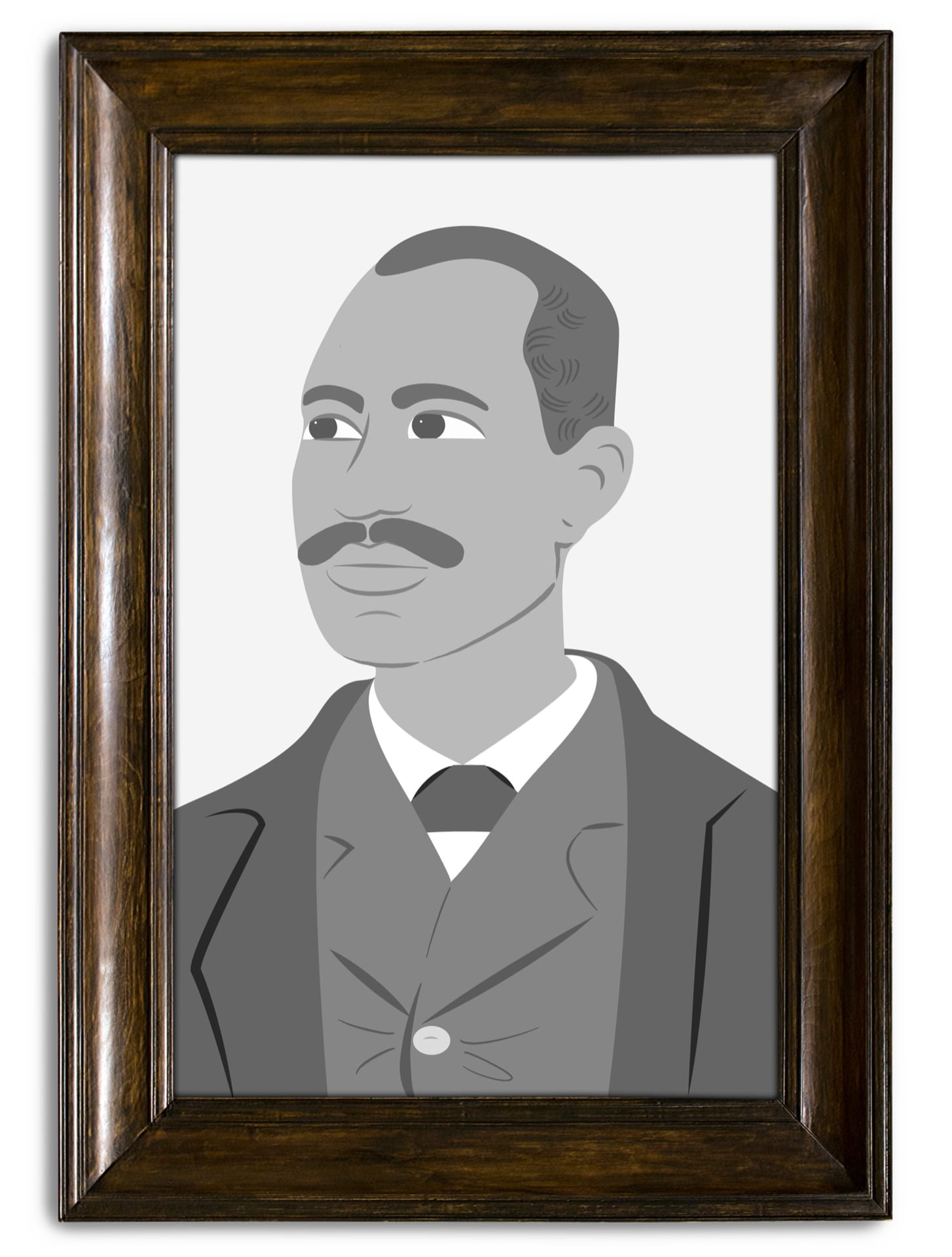
The legacy of Chicago attorney Arthur H. Simms (185?-1951) must be prefaced by the remarkable life of his mother, Henrietta Wood. Wood had been born into slavery at an unknown date in Boone County, Kentucky. As a young woman, she was manumitted (or freed from slavery) in the 1840s and released in Cincinnati, Ohio; however, she was illegally recaptured, smuggled first to Kentucky and then to Mississippi, and forced back into bondage in the 1850s.
Soon after her re-enslavement, Wood gave birth to her son, Arthur H. Simms, near Natchez, Mississippi, around 1856. (The identity of Simms’ father is uncertain.) During the tumultuous period during and immediately following the American Civil War, Simms and his mother were relocated to Texas before beginning their lives as free people in Cincinnati in the late 1860s. They then moved to Chicago in the early 1870s, and after settling in the North, Wood filed a suit against her captors; after a long legal battle (Wood v. Ward), a successful Wood was awarded $2,500 in damages in 1878. The damages won from Wood’s suit allowed them to buy property in Chicago and to fund Simms’ burgeoning legal career.
In Chicago, Simms began working as a waiter and porter for Pullman Railroads, but he soon decided to pursue a career in law. Simms graduated from Northwestern Law and was accepted to the Illinois Bar in 1889. He began his post-Law School career as a court clerk assigned to the Harrison Street Police Court, a position he later described as unsuitable; after two years of service, he entered private practice as an attorney. Simms worked in private practice for decades and is perhaps best remembered for his defense of Black Chicagoans; for example, after the 1919 Chicago race riots, Simms served on the defense team for Emma Jackson and three other Black defendants wrongfully accused of killing a white man during the siege of violence. His defense was ultimately successful, and the case was a milestone victory for Black Chicagoans wrongly accused of violent crimes.
According to a 1948 feature on Simms published in the Chicago Tribune, Simms was one of the longest-serving and best-respected attorneys in the city, still working into his nineties. He passed away in 1951 after many years of service.
Sources
“Attorney F. A. McDonnell Speaks at Movement.” Chicago Defender, October 4, 1919, p. 17.
McDaniel, W. Caleb. “In 1870, Henrietta Wood Sued for Reparations—and Won.” Smithsonian Magazine. September 2019. https://www.smithsonianmag.com/history/henrietta-wood-sued-reparations-won-180972845/.
—–Sweet Taste of Liberty: A True Story of Slavery and Restitution in America. New York, NY: Oxford University Press, 2019.
Murray, Dennis. “Smile of Time Finds Lawyer Active Tho 92.” Chicago Daily Tribune, August 8, 1948, p. S4.
Speedy, Nettie George. “Acquit Seven of Riot Murders.” Chicago Defender, September 27, 1919, p. 1.
Trent, Sydney. “She sued her enslaver for reparations and won. Her descendants never knew.” Washington Post (online resource), February 24, 2021. https://www.washingtonpost.com/history/2021/02/24/henrietta-wood-reparations-slavery/.

