November 5

  Deliverance from error second thought….


Because we typically rely on using all of our senses to learn, everyone learns differently. But with everything appearing to be up for questioning, I’m left wondering what source of facts we can rely on. In this paper, I will talk about my second reflection of Al Ghazali’s thirst for knowledge. I find his writing to be thought provoking because I now get to see things differently mostly when it comes to dreams, sense data  and reality. I do agree with Al Ghazali  when he says that we can not depend on our senses to acquire knowledge.

 It is a dense reading I must say and I keep on questioning myself while writing this and I fully agree with Al Ghazali. Overall, Al Ghazali wanted to know the essence and reality of what knowledge was and ultimately to know and be in the divine presence.

Al Ghazali’s book gave me the impression that he had a great desire to pursue the truth, which is knowledge. As I read on, I understood that this trait exists in all of us, though it may take different forms depending on the person. From concept, theory, ideas, and information, his journey leads us to the reality of the truth. His concepts and ideals were unable to lead him to Allah, the source of reality and truth. He desired to understand the nature of knowledge rather than merely acquiring it for its own sake.

He understood that knowledge kept him from Allah, and as he began to peel back the layers that had made mistakes possible, he became aware of the fact that he was relying on the world for knowledge. Through this, I believe it is necessary to consider what methods we use to acquire knowledge. We frequently come to trust the information from our senses. Sense-data is a kind of belief that comes through human senses like hearing, sense of sight, smell, taste, and touch. In terms of perceptual beliefs, Al Ghazali argues that sight is often wrong. For example we look at the shadow and declare it motionless even though its moving reasons show that the sense data is wrong. 

I agree that our senses cannot be the method of acquiring knowledge because they are prone to errors. I find this argument to be persuasive because as far as I’m aware, knowledge is the truth that should never give rise to doubt, although frequently our senses lead us to question reality. There are several instances in which we hear or see things in a way that they are not actually are. Because it’s the simplest and I believe it can also be a reality, I like to use the example of color blindness. I use this example to support Al Ghazali’s claim that our senses can deceive us. For instance, a colorblind person might mistake red for green and green for red, believing that this is true when it is not. As a result, we shouldn’t rely solely on our senses to acquire new knowledge because they are prone to error.

 When it comes to dreams and reality, I think Al Ghazali means that this world is only a dream, and when we reach that point of separation, we will see reality for what it truly is. We do this by actually remembering where we came from, remembering the experience we had before we came into this world. This is how AL Ghazali came to the realization that the only thing he still had was his intellect because it is the driving force of the modern world today. He thought that this is what he can depend on to determine what is true and what is force. Because we believe what we see when we dream or are in a dream state, our intellect cannot save us while we are in a dream state, and he came to the conclusion that intellect is not something he can rely on. I agree with Al Ghazali because dreams are not reality and we can only determine this when we are awake and conscious but I must admit that although I am aware that dreams are false since they are not real, I frequently believed that when we dream about something while we are asleep it will come true and I know this does not happen all the time but I’m just not sure what facet of reality this belongs to. I’m still not sure if my beliefs can be applied to this concept but it is something that I am wondering about. 

My conclusion is that, theoretical and conceptual knowledge does not lead to belief but the self which is the way of the heart because it leaves us to a deep level of consciousness which is based beyond thinking, its pure and direct experiences which is the path for our belief because it makes us pass through stages of experience and reality. 

October 30

BULLSHIT

Leave Your Bullshit at the Door Personalized Welcome Mat - Etsy Singapore


Harry Frankfurt begins his book by writing, “One of the most salient features of our culture is that there is so much bullshit. Everyone knows this. Each of us contributes his share. But we tend to take the situation for granted.” Well, it could be challenging to distinguish between lies and bullshit, and many people may view bullshit in various ways. But who is a bullshitter according to Frankfurt? Frankfurt describes a bullshitter as someone who either knows the truth, or doesn’t care and is just trying to be persuasive. In other words, the bullshitter is not trying to persuade you of the truth; rather, he or she is only attempting to persuade you of the fact that they are knowledgeable in their field, which is a sort of misrepresentation and deception rather than lying. But what distinguishes a liar from a bullshitter? A liar is attempting to deceive us despite knowing the truth. 


This reading caused me to reflect, and I’m still debating when or when not to call someone a liar or bullshitter. Lies and bullshitting typically take place in settings when someone wants to win over an audience, making it difficult to determine if someone is telling the truth or not. I have no idea what someone is thinking when they speak or tell me something, but if I  already know the truth, it’s simple to call them a liar or a bullshitter.


Therefore, I believe that a liar and a bullshitter have a similar concern for the truth, which makes them similar in that they both do it to further their own objectives. A bullshitter is different from a liar in that he simply doesn’t care, but his main objective is to have a perfect perception of how people will react or perceive that message, etc., and what he or she will get from the perception. A liar tries to conceal the truth, and a bullshitter doesn’t try to reveal the truth or hide it either.


Bullshitting, in my opinion, occurs everywhere, although most people probably notice it more in politics since politicians are expected to be well-informed about current events and to speak out. We read, watch, and hear the news. For instance, a journalist could write or publish that the politician made a false statement by lying. However, if a politician truly believed what they said at the time they said it, then I don’t think we can label it a lie; instead, it would be considered bullshit. However, even when you make a factual statement, it is still conceivable to call it a lie. Politicians may be outright liars in this situation because they are merely expressing their thoughts. For instance, color-blind persons may see red and mistakenly believe it to be green, whereas green-sighted people may see red and mistakenly believe it to be green meaning it makes it hard to tell if the politician intended to lie or bullshit their statement. 


Because it’s impossible for me to tell if someone is lying or bullshitting if I don’t know the truth, I don’t think the book makes a clear distinction between the two. Instead, in my opinion, the author should have drawn clear distinctions between liars and bullshit because, in some ways, lying and bullshitting are similar.


                                Picture Reference 

Leave your bullshit at the Door Personalized Welcome Mat – Etsy Singapore. Leave Your Bullshit at the Door Personalized Welcome Mat – Etsy Singapore. (n.d.). Retrieved October 30, 2022, from https://www.etsy.com/sg-en/listing/756589992/leave-your-bullshit-at-the-door 


October 29

second Peer review: race, gender and ethnicity as a basis for identify


Neige gave a thorough assessment, however I felt that she talked about a lot of things and I was left wondering what her main argument was. I believe it would have been better if she had chosen just one argument. Despite mentioning the primary assertion, she did not provide a summary of the reading or express it in a way that would make it clear to the reader what she was talking about. When writing reflection essays, I believe it’s crucial to start by introducing the summary of the reading before including your own ideas. Anyone who hasn’t read it will find it simple to read in this manner.

In her reflection, I think she was confusing sex and gender because she believes that a person’s gender is the only thing that distinguishes them from others. She says this because she thinks that gender is the only trait directly linked to biology and provides a basis for one’s ethical perspective on society and interactions within it. Its true, gender can  provide ones ethical perspective on society but its possible that someone can change their gender and not their sex. Therefore, I disagree with her statement. Gender is a construct that humans have made rather than a biological attribute. Yes, according to how society views them, a person’s interactions and ethical viewpoint can be related to their gender but that does not mean it’s the only trait that distinguishes them. I do believe that although race and gender are social constructs, it does not change the reality that they exist and that society has embraced them. Furthermore, she gives examples of gender, race, ethnicity and how it has affected people, but she did not fully explain her personal view on how she thinks race, gender and ethnicity as a basis for identity. 


Overall, I like her reflection on  ethnic diversity among people and she elaborated it  with a very clear  and concise example. In her paper, she  questions the significance of ethnicity. Well , I must say, People are frequently placed in these groups to foster preconceived notions about a particular group, and frequently, such categorizations cause conflict among individuals. Furthermore, I like her grammar and views and in her conclusion, she states that  “I reject the classification of people based on their race because there is no biological basis for it. I am persuaded that science should lead in determining the distinctions between individuals.” In any case, I also agree with this because it has fuelled animosity and created suffering among people. I will never disagree with it. Last but not least, I think she can think about the question we covered in class: Would you still be the same person if you change your race, gender, or ethnicity? to make a strong argument.

October 19

Deliverance from error


Al Ghazali was a seeker of knowledge, and in his text Deliverance from Error, he aspires to seek the truth rather than mindlessly obey, which gave him the freedom to do so. Growing up, he encountered individuals who had various opinions merely as a result of their upbringing. “ Every infant is born endowed with the fitra: then his parents make him a jew or christian or magian.” That implies that children inherit their parents’ religion from birth since they are educated about it and experience it directly, and they subsequently adopt their parents’ beliefs. This results in unquestioning inherited ideas since a child raised by Muslim parents will grow up to be Muslim, and a child raised by Christians will grow up to be Christians.

 These beliefs make Al Ghazali want to separate uncritical and inherited beliefs from the true knowledge but in order to do so, he first needed to define what true knowledge is. Then it became clear to me that sure and certain knowledge is that in which the thing is known is made so manifest that no doubt clings to it, nor is it accompanied by the possibility of error and deception, Al Ghazali wrote. 

He uses the mathematical example that ten is more than three, which we all know to be true, yet someone else comes along and says 3+10=1 to illustrate what he means by such knowledge. Such a situation won’t be valued; instead, it will leave us scratching our heads about how this is possible. Therefore, in this instance, we have arrived at rational beliefs that are derived from self-evident knowledge and perceptual beliefs that are obtained from sense data. Human senses such as hearing, sight, smell, taste, and touch provide a type of belief known as sense-data, and self-evidence is a belief that we accept as true. Some people might possess incorrect knowledge that causes others to doubt it. If this is the case, then, in my opinion, the claim is not supported by facts or the truth. Al Ghazali claims that in terms of perceptual beliefs, sight is frequently wrong. For instance, we look at the shadow and claim it is motionless even though it is moving. This proves that sense data is wrong, unreliable, and subject to doubt, and this lives rational truth as the only truths capable of leaving the condition of truth as knowledge; However, he encounters the same issue with sense data. If reason can condemn perception then there is something higher than reason. To result in this Al Ghazali gives a state of when one is dreaming. What we experience in the dream is really true but once we wake up, we realize that it was not real so dreams are not a reliable source for truth.  Even when we strive to convince others that our dreams are real, we will wake up to reality and discover that they are just dreams. We are unable to persuade them that the dream was real because we lack any supporting evidence which makes dreams unreliable.

 But according to him, if we are not dreaming, then it is still possible, but we cannot be positive that we are dreaming, and as a result, none of our beliefs are true because we lack evidence that we were dreaming, which leaves our reasoning up to doubt. We must therefore be able to rule out the possibility of false beliefs if we are to know. Meaning the requirement for truth in knowledge is what sets it apart from merely subjective ideas. If something has a factual basis, is valuable, and is supported by sound logic, then can be certain then its the truth. For  knowledge to be considered true, it has to be based on facts, reasoning and truth.

October 15

But what are you really?


Where are you 'really' from? Try another question (opinion) | CNN


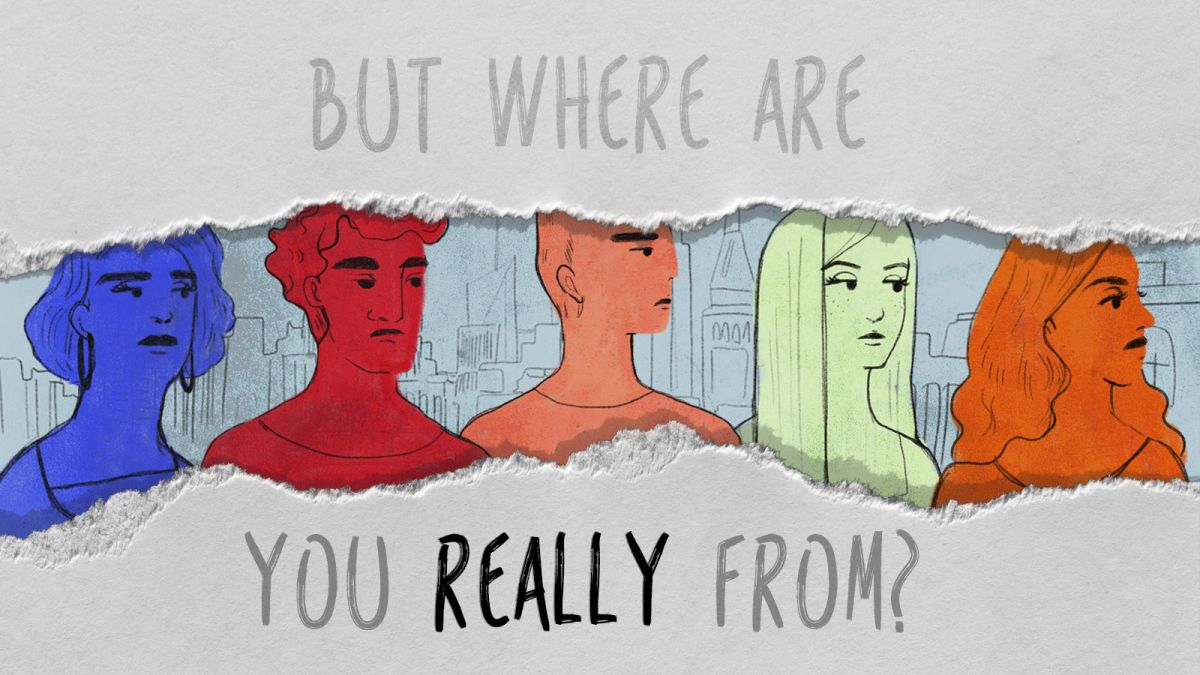
What are you really? This question frequently leads to the notion that some races are superior to others, which ultimately leads to racism. Constructivism views humanity as a single species because of social and historical realities that reflect how people actually treat one another. Race has nothing to do with the body; it only has to do with how society views it, which is a larger social practice. Yes, race is important because it shapes our social world, and it is crucial to understand your own race as well as that of others. Therefore, we should be aware of what we identify ourselves with because many individuals have experienced racism in the past and some continue to do so today.

In his text, Mills makes the case that race existed from the start, i.e., as a result of a social construct between the west wanting to rule the rest of the world which led to the white privileges and hierarchies that we now recognize. Mills agrees with Appiah that there are no racial divides among individuals that are based on biological reality. However, Appiah holds the opinion that there are no races because race is a biological construct and as such, is not real.

However, Mills believes that race exists because who you are is a real thing. Consider how you are regarded in society as an example. Depending on your race, you may or may not enjoy certain privileges, which indicates that there is an objective fact about you. He holds that although there are no biologically based distinctions between races, race nonetheless exists objectively since none of us can choose to identify ourselves with a particular race.

Objectivism is the idea that categories of race exist regardless of our beliefs or actions. Vegetables, for instance, are objective; it all relies on how individuals prepare them. Additionally, race is linked to a wide range of factors, including ancestry, culture, self-awareness, and experience, but only to a limited extent. but in quace, there is no relationship to our heritage or appearance. Mills  believes that race is objective since he is unable to choose his race. They are human races because of biology, which is realistic, or because people are naturally of that race whether they accept it or not. 

Race is a human convention that, in my opinion, cannot be altered because doing so would require every person in the world to change their opinions, which is impractical. Who exactly am I? I have never really given this question much thought, therefore it ranks among the most challenging ones. Although race is a social construct, I still think it has a significant impact on how I identify.

I am  black and African. Despite my protests, the world will still categorize me as black, and that defines the type of person I am. Even if my genes will still remain the same, when  I bleach my skin, dye my hair blonde, and change my accent, society will see me as white if I do that and I will be given more privileges  than someone with dark skin. So, who exactly are you? Possibly depends on how society views you.

October 7

If you were to change your race gender would the resulting individual still be you?

How do we answer the question "Who are you?" from a personal and  philosophical level

Identity enables us to manage both our own and other people’s lives. It is the least creative personality trait and a fascinating component of awareness. Your race and gender can completely alter who you are since they are social constructions because race is something we as humans invented. Many individuals desire to classify people according to their race, gender, religion, and ethnicity. While on the other hand, gender is also based on socially built qualities, whereas sex is determined by biological attributes. They acknowledge that there are differences in how people experience gender depending on their own self-perception, expression, and behavior. No matter how you were born, we each have our own identities. Appiah Antony thinks race and gender are different. Race is not a biological fact about us because there is no biological fact that divides us into groups. It’s okay to identify yourself with ethnicity but people are making a mistake by identifying people with race. 

Appiah sugests  a constrast between our attitudes to (ethical) gender and (ethical)race, he writes, we standadly hold open to people to believe that the replacement of the characteristics morphology of their sex with a (facsimile ) which means the “exact copy” of that of the other (major) one would produce someone other than themselves, a new ethical person; while the replacement of the characteristics morphology of their ethical race by that of another would not leave them free to disclaim the new person. This brings us to a question of how we identify ourselves. 

Who am I really? This got me thinking about a lot of things, especially since my grandmother had just told me last week that I didn’t choose to be born into my family and that I need to be more determined to succeed. I am what I am because of the family I was born into and the upbringing that I had. I was raised in a Christian home in Africa, specifically Zambia, modeling the sort of person I am now. I think that the race and gender I was born into have a lot to do with how I act and think.

If my race and gender were to change. I believe I will be a completely new person, starting with the way I perceive the world, how I perceive other people, how I speak, think, and deal with life in general.

For instance, if I live in Africa but change my race to white, I won’t worry about how people will perceive me because I know that because I am white, they will automatically assume that I am intelligent even though I am not, giving me an advantage over other people.  I will give you another example: If I was born female and then switched to being a male who was born and raised in an African home, I would think and act differently because I would be expected to work hard and support my family, and I would have no justification for not doing so since I would be judged as being lazy if I didn’t. However, if I switch to becoming a woman, I can work but am not actually expected to support my family, which means there is less demand on me to demonstrate my ability to work hard in society.

If you change your race, you will want to emulate the  race you first identified yourself with, which removes everything you used to identify with and causes you to become a completely different person. If you are born into a different race, you are born and treated differently.  You cannot return to your former self, even having memories of yourself as a different race and gender.

October 2

Experience machine peer review revised entry

                            The Experience Machine - Matrise - Virtual Reality Philosophy                                                                              Experience machine   

I will start by explaining the experience machine with the example I saw.  Imagine that I am a scientist and that I approach you with the offer that I can change you into a butterfly. What are your thoughts? If you sign up for this, I promise that you will receive all the nice things that butterflies receive, worry about nothing, meet other butterflies, and be in charge of everything if you so want. You probably would decline if this were a true offer because you do not want it. If this was a sincere offer, I suppose you would say no because you do not want to become a butterfly and if someone says yes you would think they would be making a mistake. 

Hedonism is called into doubt by this. Is hedonism hampered by the fact that you do not  want to change into a butterfly? Pleasure is beneficial for each of us, and agony is ultimately terrible for each of us.

Therefore, if you consent to becoming a butterfly, you will feel a lot of pleasure and little to no pain; however, the fact that you would object to becoming a butterfly and that you would be sensible enough to believe that it is not in your best interest to do so seems to demonstrate that hedonism is force. Perhaps something seems to matter more than pleasure. However, other people could respond, No, I cannot be transformed since it is not in my best interest because butterflies are not capable of feeling the same amount of pleasure as a human is capable of experiencing because they do not acquire that much pleasure as a human being. For instance, a human can walk around, do all the physical work, go out with friends, and have fun together, but a butterfly cannot. For this reason, even though hedonism is still true, it is illogical to turn humans into butterflies. 

The experience machine comes into play here. Imagine there was a machine that could provide you with whatever experience you wanted. Your brain would be stimulated by neuropsychologists such that you would believe and feel as though you were writing a great novel, meeting friends, or reading an intriguing book. But you will be floating in a tank while having electrodes attached to your brain. Would you accept this offer if it were made to you? Nozick asks. You will experience all the pleasure and little to no pain if you plug in. 

If you said “No,” according to Nozick, there is something more important to you than pleasure because  the experience machine can give you whatever amount of pleasure you could ever desire. But why would you say No? suppose you say No. Nozick believes you would decline because, in the end, there is something other than pleasure that is better for you. Nozick believes that there are other things that are beneficial for us: He cites, plugging into the machine limits us to a man-made reality, to a world no deeper or more important than that which we can make, second, we want to truly make contact with reality and third, he believes that we want to be a specific way, for example, we want to help people and actually be there for them. (Nozick Robert, p. 43). Meaning that the machine limits you from acting in a certain way and accomplishing things in reality. For example, you can plug in the thoughts that you are writing a novel while floating in the tank but in actual sense, you are simply experiencing what it would be like to write a novel without the actual  experience of doing it: for example, sitting behind the computer and writing down your thoughts, and struggling with words etc. 

Shrijan  argues that he can not plug in because the pleasure might feel real, but in an actual sense they  aren’t inclined in the real world, and therefore, exist in some different  assumable reality. He further adds that whatever one is feeling is induced and exists purely on the brain, as a form of mental statism.  Running away from reality ultimately means running away from oneself. I would argue with this because people define reality in different ways and I personally think that I would not be running away from my true self if my body is in the tank and my brain is imaging all these things and I feel that I am there because that’s reality. How can I run away from my true self if everything I am experiencing is in my brain and I am part of the brain?

If I was to be asked this question, I would personally say yes and plug in because my imagination makes me believe that the  experience machine would provide me the desired sensations, which means, I can easily put all the experiences because I do not  want to feel constrained by a man-made reality. What if this world is not real and we just tell ourselves it is? This is one of the other reasons I would plug in because I can train myself to believe that I will not be missing anything in the world of what many people call reality. I can put all the beautiful experiences and live the best life. 

 There is no purpose in not plugging in  because our surroundings are pre-planned and we must cope with everything that is thrown at us, despite our best efforts to escape it. Like many people claim, only through suffering can great things be attained. This statement disturbs me since there is no reason to endure suffering in order to achieve great things in life. Additionally, not everyone who suffers receives pleasant experiences as a return, and there is no assurance that you will like your life after suffering, so why not turn on the machine and have fun instead? It is not worth it to stay plugged out. I  believe I do things because I want the best result out of it. If there is a perfect, clear road right next to the one you want to go on, would you rather prefer to travel on the one full of thorns? No, is the truth. Why? because there may be a better choice available for you than putting yourself through suffering all in the name of reality.

Who, however, would risk their lives in order to choose sadness over all the delights and enjoyment? Personally, I am unable. I would plug in the machine for that reason even though other people think that’s not reality and have the best experience I could possibly hope for.

September 27

Do Your Friends Actually Like You?

Do Your Friends Actually Like You? In today’s society, a lot of people refer to anyone they barely know as a “friend” and then start whining when they discover that the other person does not feel the same way about them. We don’t normalize phrases like “colleague,” “acquaintance,” “classmate,” and other similar terminology, therefore I typically find this to be a problem. Do your friends like you? I would say yes. I am aware of my friends’ identities and the nature of our bonds.To distinguish between my friends and acquaintances, I’ve drawn a thin line. Since we have such a strong bond and they have never left my side no matter what, I am willing to stand by them and I know they feel the same way. My advice is that, in order to prevent wounded feelings, we should all take some time to try and identify who our friends are and begin addressing people properly.

Do Your Friends Like You?

In today’s society, a lot of people refer to anyone they barely know as a “friend” and then start whining when they discover that the other person does not feel the same way about them. We don’t normalize phrases like “colleague,” “acquaintance,” “classmate,” and other similar terminology, therefore I typically find this to be a problem. Do your friends like you? I would say yes. I am aware of my friends’ identities and the nature of our bonds.To distinguish between my friends and acquaintances, I’ve drawn a thin line. Since we have such a strong bond and they have never left my side no matter what, I am willing to stand by them and I know they feel the same way. My advice is that, in order to prevent wounded feelings, we should all take some time to try and identify who our friends are and begin addressing people properly.

September 27

READING “HOW TO STAY ON TOP.”

In order to prevent being overwhelmed by a lot of material that can be somehow unimportant, the author’s interest is to try to help students comprehend that one is not expected to master the entire book word for word but to read the necessary information in a book, “what, why and how” (Hjortshoj) are questions we ought to ask ourselves to minimize confusion when reading. When it comes to reading, there is a distinction. When given study material, it’s crucial for college students to first grasp what the author is saying so that their understanding is put to use and their memory of the content is improved. Some people read for pleasure, while others read to understand. “You have to actively design a framework” (Hjortshoj) is a phrase that is frequently used to emphasize how significant it is to create a strategy that will help you in remembering the material you read. As a student, avoid attempting to absorb all of the material in the book at once because you won’t recall the majority of what you read.

September 27

What Makes Work Meaningful ?

What makes work meaningful? Many of us associate the word “work” with an activity that we engage in for the purpose of earning money. But regardless of whether someone is paid for their labor or not, work can be described as “an activity involving mental or physical effort done in order to attain a purpose or outcome.” I once heard someone say that work is formed, not found. But what exactly gives work purpose is the question. Most people have adjusted to the idea that we must work in order to exist because of the way our society is set up.You must put forth a lot of effort if you want to put food on the table.

I grew up in an African family where my parents would assign chores to me and my siblings and hold them accountable if they did not complete them. I learned early on that effort has value since it leads to rewards. “Meaningful labor has indelibly many dimensions, just as life has many possibilities for meaning,” writes Andrea Veltman in her book. According to Veltman, work is meaningful when it accomplishes something beneficial or purposeful. This is one of the criteria she provides for what meaningful labor is. Personally, I agree with this since I always want to get something out of the work I do and I don’t see the point in exerting effort into something that doesn’t accomplish anything because it doesn’t give my life any further meaning.

Finding the most authentic and profound part of oneself can also result in meaningful work.When they put their money in a business or anything else that will eventually be profitable, most people regard their labor to be worthwhile. Helping people and resolving their difficulties can also be meaningful labor as a means of preserving humanity. If one has a job that does not result in any results, or more specifically, if one does not see any benefit to performing it, work may feel meaningless and difficult. When someone is engaged in a job they enjoy, it makes them feel so much better and contributes to long-term satisfaction. Since we spend nearly every waking hour at work or performing labor, it should be entertaining rather than draining. I can still clearly recall how difficult and traumatizing my second job was. I enjoyed my job in customer service, but the atmosphere was so unhealthy that I started crying almost every day when I left. I stayed because I hadn’t yet found another job, and I needed the money since I was saving for something.

That is why it is crucial to find fulfillment in our profession and establish a safe environment for everyone.While working is not a means of finding happiness but rather a way to support oneself and a family, some people find it fulfilling to work, while others set out to attain career fulfillment. Because people prefer to judge others based on the work they do, it is a form of self definition because when you introduce yourself and mention the type of work you do, the listener instinctively understands who you are as a person. And because it is done for their own self-definition or joy, that type of employment is essential for living well. When my work has a purpose in my life, I find it meaningful